
|
BPH 106H SM106 Restoration 2026A |

|
|
Digging around the history of the vehicle pictured while laying over at Llangollen during the New Year's Day Heritage Bus Running event, I chanced upon an image posed next to BL88 running on its OJD 93R plates. That surprised me, as I have only seen it on its 'proper' plates. It was the comment by Google's AI Overview that had me in stitches: "Used in the Chester and Wrexham areas by operators like Crosville (a former London Transport subsidiary)". I had suspected as much all along! Seriously, Google needs to do a bit of extra homework and learn the context of vintage bus events. The problem is, even the mention of that gibberish will in turn be used in the next iteration of bullshit, with who knows what outcome? It was a good day out, though marred by TfW's progressive introduction of CAF junk-trains in place of its legendary 158 Super Sprinters. A random change of buses resulted in my apprentice and me riding on an open-air Volvo saloon in a thoroughly seasonal squall of rain on a windy and very cold day - but everyone was very good-humoured, notwithstanding. The ride to Llangollen on the Leyland was an interesting contrast with last year's RT run, and very enjoyable. Well done, everybody!
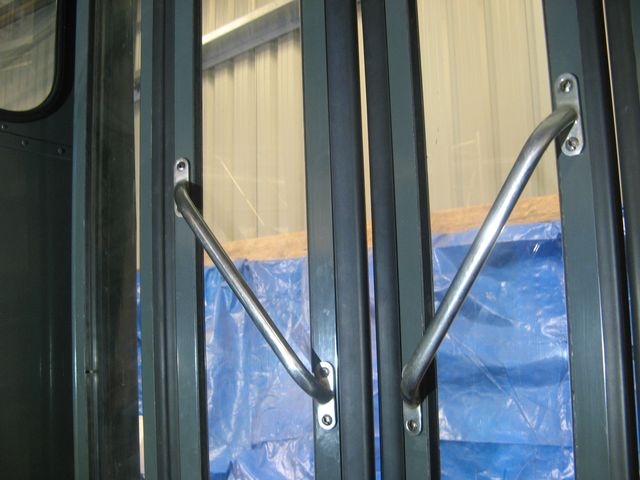
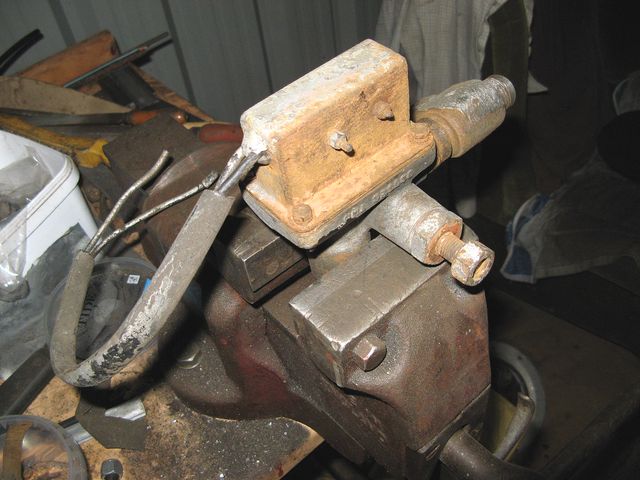
Mucking about at heritage bus running events does not cut the mustard of returning my own bus to service, of course. Therefore, a short visit was made on the following day to install all the screws that I had fettled or accumulated over the Christmas break. It was cold! Gloves are an impossibility on such jobs, and at 3°C with a sprinkling of snow on the higher fields around the garage, any contact with metalwork was an ordeal. However, a full set of 8 countersunk screws were trimmed to length and employed to attach the handrails which were a present from MB90 back in April 2018. The small handles for pulling the doors still require attaching, but they need attention first. The set-bolt in the operating arm was measured, trimmed and inserted with a star-washer, and that was enough for me. Attention continued to the assorted pieces of magnolia-ware in the kitchen, the only place where I can make progress in any semblance of comfort! Storm Goretti did nothing for us up here, but continuing cold meant a flying visit was all that could be sustained. Apart from picking up my tin of magnolia coach enamel, finishing and testing the doors under power was the focus. The pull-handles (strange alloy castings had become somewhat pitted and corroded) were polished and attached, then the auxiliaries air tank was pressurised and the doors put through their paces. While the air was on, I checked the new first-gear pipe and found incidentally that the main EP valve air pipe was leaking at the pressure switch. Soon remedied, but in need of serious attention in due course. Working at home, again, the coach enamel was applied to all the parts and looked fabulous. It just shows what is possible when you are working under 'optimal' conditions. A new (and rather expensive) LEAVE BY CENTRE DOORS vinyl graphic was sourced for the front blind flap, and applied together with NO SMOKING. It looked fabulous. Cold, poor weather, car MOT test, domestic priorities and medical appointments (for which I was at least a taxi driver) have resulted in a lack of focus on the bus recently. Of critical importance has been the marmalade season - without an ample supply of the magic orange stuff it would be difficult to motivate the small army of labourers that are relied upon for bus work. However, the 'shopping' has continued, and supplies laid in for resumption of work. Finally I was able to face the cold and venture to the garage, where replacement brake air pipes for the rear chambers were produced. Straightening 3/8" alloy pipe by rolling between flat boards was warm, vigorous exercise. Then it was down to forming the pipes with careful attention to the original (very crusty), offside pipe, but altering the geometry slightly to produce straight runs through the top tee-piece. The nearside was more challenging as it was effectively a mirror-image, but the tee-piece where the flexible hose attaches is not central. That took until lunch, after which I decided to dig deeper into the crud which remains from the terminations in the junction box for the gearbox air-pressure switch, which has clearly been disconnected so that the lamp on the Stop flag box is not illuminated permanently. Nothing would come undone after years of electrolytic corrosion, so I cut the wires and pared them back so that they could be joined for testing. Even that was not simple, because the copper wire was also corroded and brittle. Normally I would run my generator to power the 24V shore-supply, but on this occasion some excitement ensued. One of the boat-owners who rent space in my garage has a new 'MG' EV, which is able to provide power at 240V for incidental purposes - on this occasion to a kettle and microwave oven on his boat! So, a first for an SM, surely, was to be powered up from an EV. After some tinkering, the red light on the stop-flag box illuminated, so at least the wiring is still all present and continuous. Good bulbs had been fitted a very long time ago. After that performance, I had to try and warm-up by cutting through the fixing bolts for the osr mudflap, which was mostly missing, and a replacement will be sought and fitted.
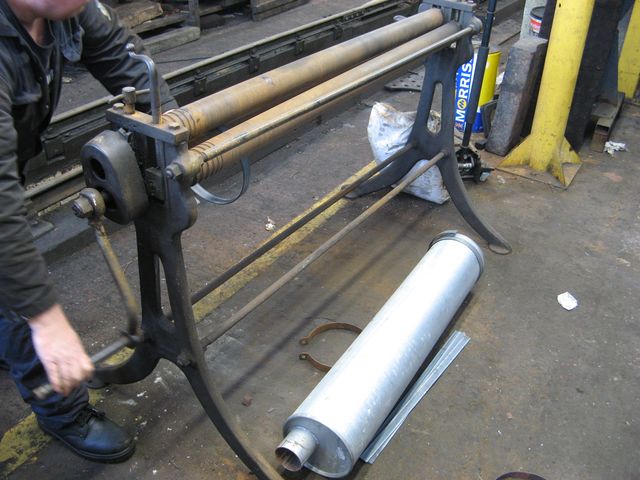
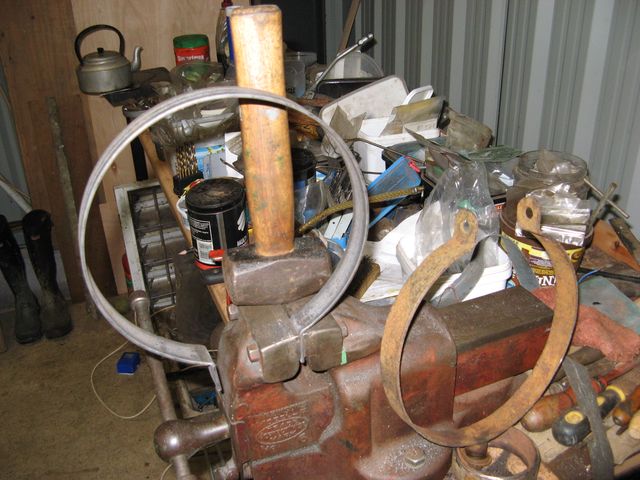
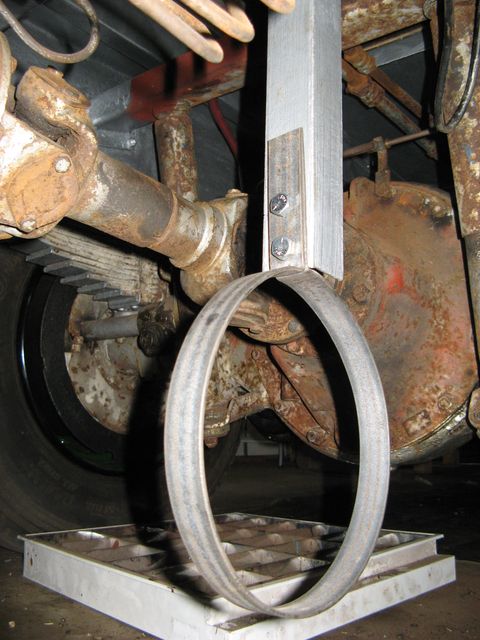
There will be a certain amount of metalworking required before the new silencer is installed, so I took a forward step by contacting the Ffestiniog Railway to see if the workshop at Boston Lodge could form the circular straps required. Yes, came the answer, so a trip out was organised and all the parts and new metal were ferried to the railway works. It took less than one hour to put the steel strip through the bending rolls, which are themselves of great age but highly effective (much bigger rolls are used for platework, of course). It was great to be in such a busy workspace and sharing the locality with (for example) the boiler of MOUNTAINEER and the narrow-gauge track tamping machine. Payment for this service was in the form of a donation towards the rebuilding of BLANCHE which is in need of a further round of TLC. The first session of February was too cold for anything but the most robust tasks, so I set about putting the angled ends on the straps ready for drilling. This was good exercise! First I did the clamps for the heat-shield, because they were simpler and less critical dimensionally. Then, having got the feel for the task I did the pair of support clamps, which have to come together and grip the silencer 'just so'. The first one worked perfectly, which was encouraging, but the second was loose and I had to straighten my bend and try again. Luckily the steel proved to be more malleable than I had imagined, but the end result was definitely less neat than the first. "So it goes", as Kurt would say. There will be no prizes for perfection in the exhaust arena. Continuing the theme, drilling the newly-formed clamps to accept their bolts was the priority. So many holes were required (6 for the heat-shield and 4 more through the doubled strap) that a gauge was in order to position the holes fairly accurately. I also realised that poor lighting and imperfect vision should have encouraged me to take my specs along - a lesson forgotten since work on the electricals and bus-bars. Anyway, another lesson learned was that 25mm steel strip was only a nominal dimension! Prototyping took until lunch, after which a work-flow was established for pilot (2.5mm, by hand), intermediate (5mm) and final size (10mm) drilling using both my power drills to avoid swapping bits every few minutes. 10mm is a handy clearance size for 3/8" and much cheaper to buy! A further diversion was to drill the improvised chassis bracket to match its partner (I hate having to swap spanners between identical fixings) which had been improvised, then drill its clamp to match. The 10mm cobalt drill bit proved capable of walking through the malleable steel without a pilot bore because the big machine gave fabulous torque at low speed and the bracket was a good jig to hold everything steady. By the end of the day one support was fixed properly in place ready for the silencer, although I failed to correct a slightly misplaced original fixing hole. Dratia! I dared not try my luck any further, so called it a day on a high.
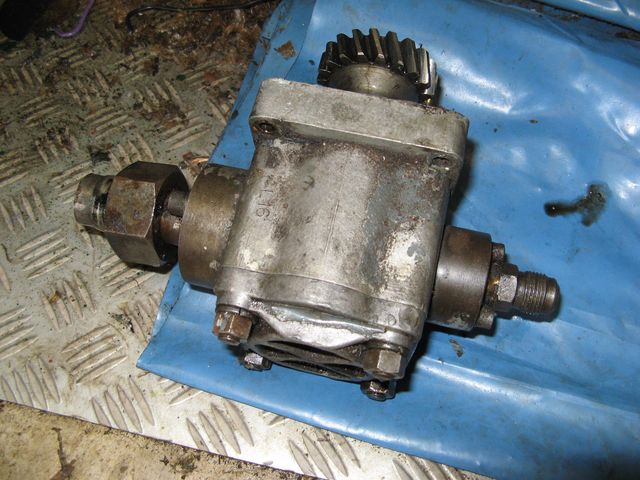
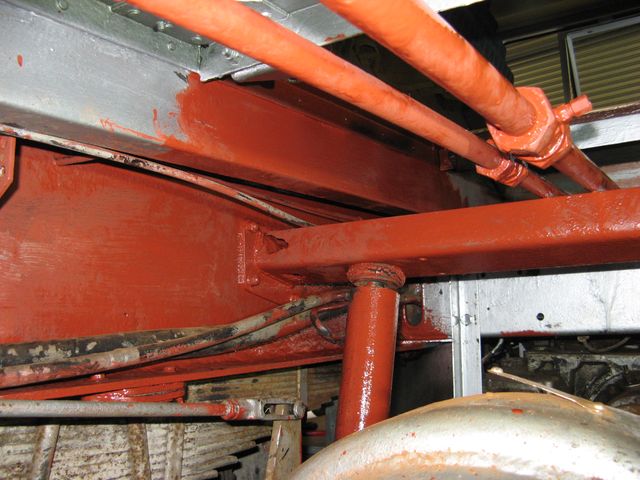
In the continuing cold there are few tasks which can be completed on-site. On the other hand, preparation for better days continues under the bus, where the action is focused on the offside chassis member between the 'differential' cross-member and the handbrake cross-shaft, where corrosion has followed a chronic lack of attention due to difficulty of access. In line with general principles, items and pipework are being removed for painting and repair where necessary. Testing indicated that the gearbox air-pressure sensor microswitch is OK, so it's time to dismantle the spring valve unit. Fortunately, these arts are documented in the LT Merlin Chassis Maintenance Handbook which is a tome worth more than rubies (preserved and copied for me by my Hitchin benefactor) and I am emboldened by understanding how it works and how to adjust it. It's odd, however that it appears to be inoperative historically, but not leaky! Two of three pressure-reducer securing bolts gave up after a struggle, the third required attention from a hacksaw-blade wielded in a gloved hand, but all pipework was out and good access obtained for a clean-up and preparation of parts and chassis. Dismantling the pressure switch was a doddle, and everything looked fine. I was expecting a load of gunge, but not so in fact. A wash with paraffin and reassembly with a smear of silicone grease after inspection of the seals was all that was required, and conducted in the warmth and sanity of our kitchen. Back at the bus, a pressure feed was jury-rigged and the pressure regulator of the compressor used to check the on/off action of the switch. No fault could be found, so I surmise that the only failure was the wires snapping. Now, here's the rub: if it was a fail-safe system the wiring error would be detected - but the absence of a light in the cab with low air-pressure was a fault that was tolerated. Here endeth the safety lecture. The warmest day of the year sofar was spent cleaning the chassis and cross-member which carries the top of the shock absorbers (the condition of which will not be discussed here in case it leads to sanction) ready for the rust treatment. The first paint of the year was duly applied, and lunch taken. Then the hydraulic pump was removed for checking, quite simple when I realised how it worked. It needs expert examination, since there has always been an tendency to drip, but intial discussion was a bit pessimistic because the aluminium alloy body wears badly and cannot be corrected. Discussion therefore centred on sourcing a replacement, which I hope will be painless. It appears to be a unit much used on tractors and small fork-trucks, so fingers crossed!
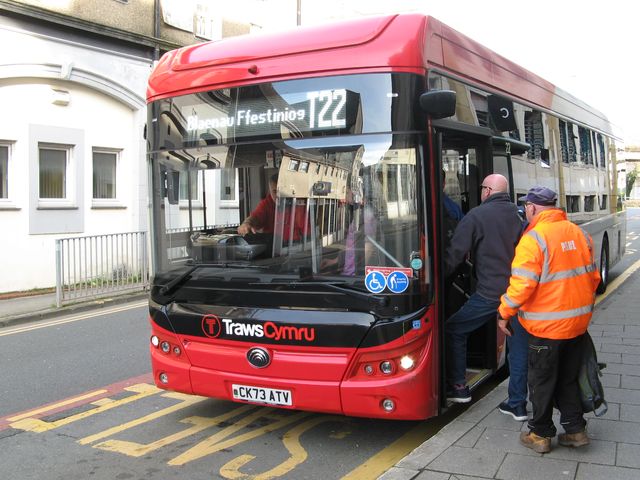
There followed a week's holiday on the Llêyn Peninsula, and I was hoping that all would be ready to resume painting on our return. However, at this time of year, sunshine equates with cold weather, so the job is still about preparation and a long line of parts has built-up on the holding area. However, it was encouraging to see the good state of rust treatment from before our short break. A dry-run of the rear brake chambers assembly was part of the game and that went well, looked good for a while and finding all he parts was useful. Condensation was evident, while thin, drizzly rain drifted down outside. Best Welsh weather! I was fed an interesting anecdote from a well-informed source, occasioned by the problems arising from a chronically inactive RP lubricator on another vehicle. The optional fitment of the lubricators to MB and SM chassis was specified by London Transport, and fitted from new by AEC with second-hand units recovered from RTs going to scrapyards. Additionally, exchange units going to garages were similarly second-hand, and sometimes faulty as well! I have discovered for myself that testing an RP lubricator is a long-winded and messy process. Another day was spent on preparation because I think it is time well-spent, and when the paint comes out there will be real productivity gains. To be honest it was still too cold for comfort, and the strong wind was doing a good job of drying the grass by the garage. I tried starting Flymo SP75, but it would not play. My neighbour said that I had no chance if I had left E10 petrol in over winter, so the tank was siphoned out and a fresh ration poured in. It roared away at the second pull! So that was another life-lesson! Several more bits of air pipe were cleaned-up, and a further few feet of the double hydraulic line, which is quite badly corroded. I was an interesting shade of orange when I crawled out at the end of my battery lamp's charge. Another day of 4°C with snow showers on the hills brought an end to the campaign of preparation because I had run out of bits to work at within the current zone of focus! The miserably cold weather seems endless, but between showers I managed a bit more grounds maintenance while admiring rainbows. It seemed almost impossible that two days previously I was cutting the grass. There is a Welsh saying: "Daw eto haul ar fryn" (trans: Sun will come again over the hill); I fervently hope so. Well, it did, and warmth too, but I had already earmarked a day out (should have been visiting Swifts and Merlins in Southern Hertfordshire - long story) and a raft of domestic duties meant that some of the sunshine was used for different purposes. Only the Great North Wales Day Out concerns us here. It went like this: Deganwy - Llandudno Junction (197 120) - Shrewsbury (197 004+033) - Aberystwyth (158 830) - Dovey Junction (158 830) - Porthmadog (158 826) - Caernarfon (Yutong E12, CK73 ATV) - Deganwy (Volvo B8/Evora, BV72 KLM). A total of 268 miles (according to my GPS) in 7 hours and 54 minutes, total spend £21-95, plus two dibs of a TfW Freedom Card. What a fabulous route, and every schedule kept to the minute, which was lucky because the connections were robust, but tight, particularly from rail to bus at Porthmadog at 6 minutes. The most interesting part was the operation at Dovey Junction, where ETCS enables minimal headways for trains which divided at Machynlleth using the diverging platform lines and the modern passing loop to cross an outward-bound train. Slick!
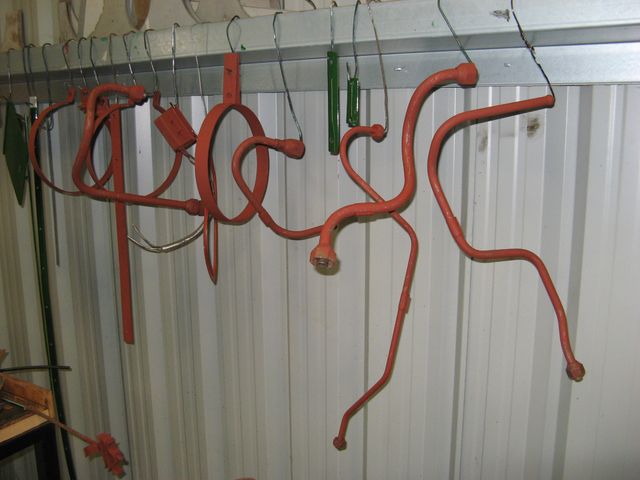
Somehow it seems fitting that the weather at the spring equinox was just about ideal, but a cold start meant that some landscape maintenance was performed while the garage warmed up, and then a little more preparation was undertaken. The bolting faces of the brake-chamber brackets on the differential casing needed a clean-up so that they were as smooth and clean as possible, and once that was done an early lunch was taken. Then it was under the bus for the next 90 minutes applying red primer over the corrosion treatment and what seemed to be miles of air and hydraulic pipe. Then came a long spell of painting loose parts, mostly air-pipes and silencer straps. Great satisfaction was registered when it was all over. A rewarding cup of tea was taken, and then the mower was started (easily this time) to take the opportunity of a closer cut and removing the tufts left after the first cut of the year. That generated enough warmth to consider taking a layer of clothes off, with the thermometer registering 15°C. Extraordinary!
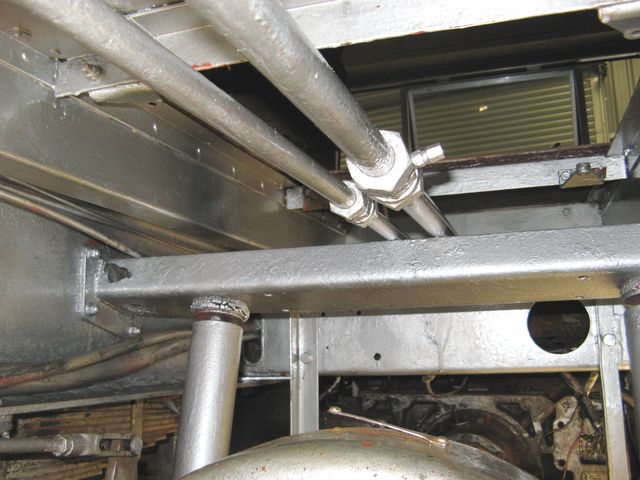
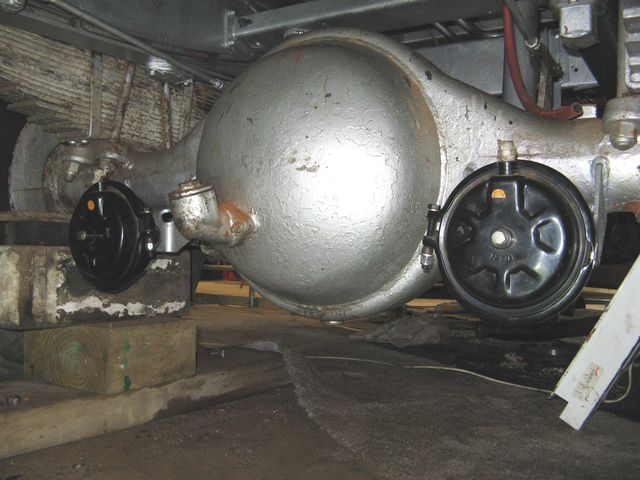
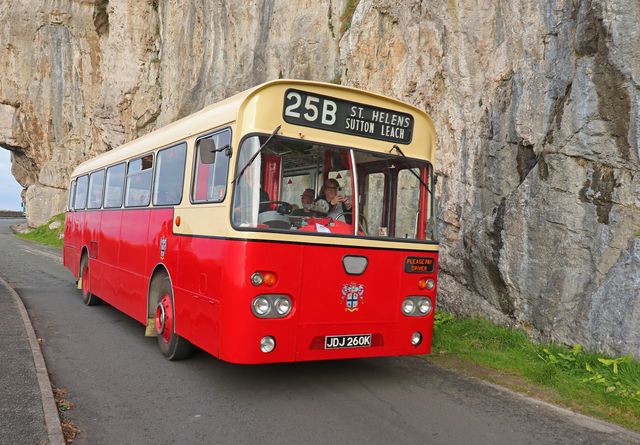
A week or so later, after a lot of unhelpful weather, a suitable day presented an opportunity to put a coat of silver over the (well-cured) primer coats. It all went well, but when I went out to a meeting in the evening I found that a blob of silver was adhering to my chin and beard and could not be removed easily. Eventually it was removed with a deal of soapy water and a comb, but there was some pain in the process. It looked smart, so on a subsequent date I went ahead and installed the new brake chambers. A pair of clevis pins in very good condition had been sourced from a donor vehicle, and after a bit of fettling to clean out the bores of the fork-ends they went in smoothly enough to assemble the push-rods and tighten the fixing nuts on the chambers. Remarkably, the setting distance for the push-rods turned out to be correct. I think that is because I measured them when cropping the stems, which were made to special order through Truck Parts North Wales. Originally, the chambers were fitted with threaded rods and forks because they are actually trailer brake parts nowadays. Plain stems are needed for the setup on the Swift which has fork-end adjusters on a tubular socket that accommodates the movement of the handbrake pulling on the opposite end of the camshaft operating lever without moving the push-rod assembly away from the diaphragm. I was very grateful for their advice and involvement because I thought I was sunk after paying for new chambers that turned out to be useless! In the end, the company that made the new push-rods for the chambers jumped the gun to provide items that were almost, but not quite correct and were persuaded to reduce the cost significantly or take them back. The ultimate cost was just £25, which was indeed a bargain. "So it goes", as Kurt would say. Now, I just need to find the hook-on return springs........ As an aside, the matter of the RP lubricator feeds to the front springs has progressed somewhat. albeit backwards! My real hope is that I shall be able to find one more ball-shaped elbow to fit the end of the nearside spring pin, but examination of SM and MB chassis that are available has not yet found a single vehicle with a set of flexible pipes to the swivels! More remarkable, my learned informant states that he has never seen such a device as that carried on SM106. If the RP was working on those chassis, where did the oil go? The state of the only one which is operable suggests that it dribbles off the chassis bracket onto the road. The plot thickens....... Domestic life has become complicated recently, so works visits are a bit scarce at present, but an opportunity arose on Easter Saturday. Initially the day was cold and fairly still, so I thought that I would use my fan-heater to warm the area which required its top-coat of silver. It's quite enclosed beneath the floor when the traps are closed and after 45 minutes I considered that any moisture would have dispersed, and some parts were no longer cold to the touch, which was quite good with an outside air temperature of 7°C! Inside, it seemed colder, but that's often the way in the morning. Paint flowed and I was happy. Outside, however Storm Dave was making its much-advertised debut, and as the wind rose so did the temperature, so much so that by late lunchtime it was 12°C and the (rapid-drying formula) paint was drying well. As the first area I had painted was where the pressure-reducer for the gearbox is located I decided to put it back in place, having discovered that my pressure-gauge would attach in place of the low-pressure switch - a real win! I could not resist a test, so the portable compressor was run to charge the auxiliary reservoir and, wondrously the gauge said 60psi for an input around 100psi according to the compressor. Time to make for home! Since that time, sadly almost a month has passed without significant progress. Work around the rear brakes was just about the only activity in April, and it wasn't particularly positive. All the pipework belonging to the gearbox air supply has now been reinstated and clipped into place. I hit upon the idea of running a 5/16" die down the thread of the stud which carries the saddle for gearbox air and fuel pipes. As it appears that these are tapped into the chassis, rather than simple bolts, It seemed prudent to preserve them! A new nut and some lubrication should mean that the future for any disassembly is enhanced. With that sorted, the big P-clips for the chassis wiring loom were put in place and the over-length screws cropped - looking tidy again now! Finally, with the brake chambers in place and the push-rods settled on the camshaft levers, it was time to check, tighten and pin the retaining nuts. No great bother on the nearside, but the offside which had proved to be so awkward to release was another matter. Funny thing was, the nut was insanely tight, and even when done up as far as I could manage, it would not grip the camshaft lever, nor could I insert the split-pin. This suggested something very fishy, and there will be more investigation before the job can be considered complete. Thereafter, all the spare time I was permitted was spent on or at the Llandudno Transport Festival, which turned out to be be a much better event than I was prepared for. The ultimate prize was a ride around the Great Orme aboard St.Helens 260, Marshall-bodied AEC Swift 3MP2R1351 which was most ably driven and making all the right noises. That brings down the curtain on the first part of 2026.
|

|
BACK .......to the index. |
FORWARD .......to continue the diary. |