
|
BPH 106H SM106 Restoration 2022A |

|
|
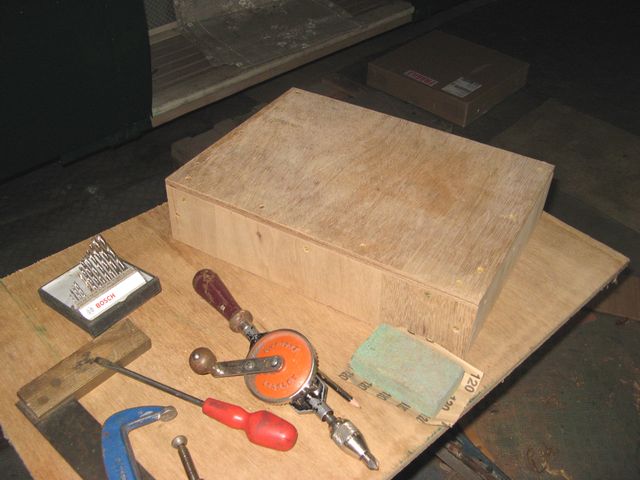
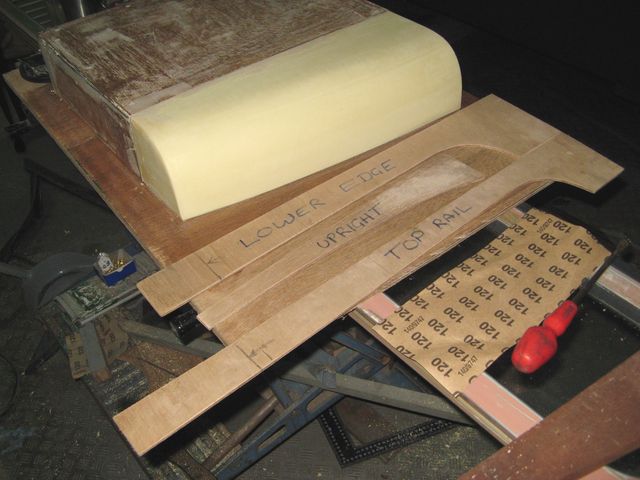
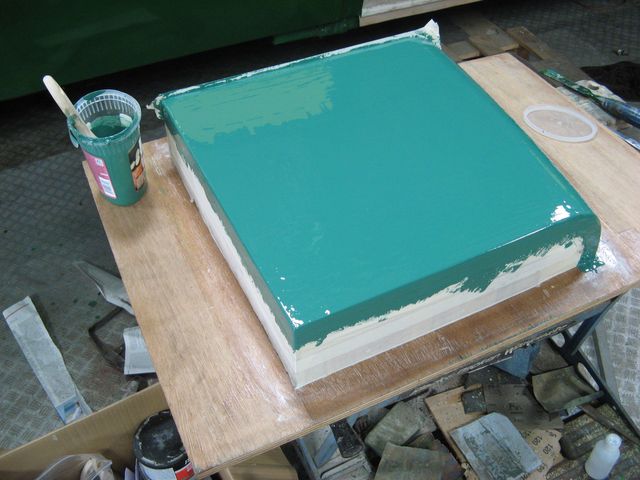
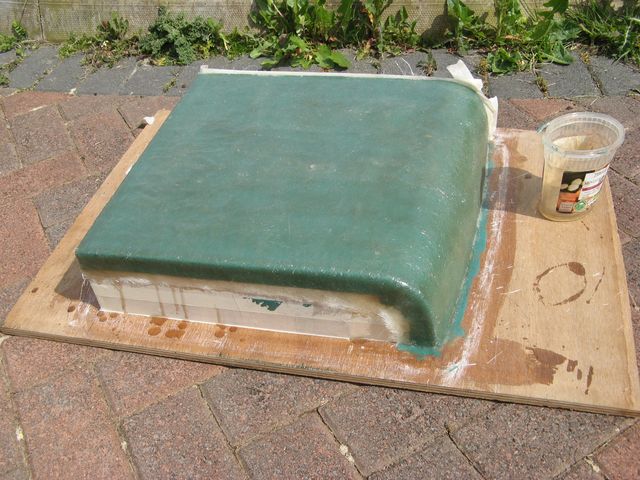
Welcome to another new year in the life of SM106. Winter cold does nothing for either of us, and of course it actually hampers activity at the garage. Typical of this effect is the long-running saga of the lower dash corner-panels, whose re-creation in GRP is proceeding. A box has now been made for the plain part and joined to a piece of PU model board in which the subtle curves of the original corner have been recreated, so a 3D replica or 'plug' is being made ready for laying-up a mould for the final part. It's weird to see a solid model of the corner of the bus, particularly as it is a nearside corner and the model from which the profile was traced was an offside corner. That called for some mental gymnastics. The box is designed so that it can be re-used with a new lump of PU model board to create the opposite-handed part in the fullness of time (like when the offside corner gets a ding). I have tried to find and mark the centre of the fog-light aperture, which will not be created in the initial model, but cut subsequently to give some leeway. Temperatures of 6 degrees are better than frost, but way too cold for resins and gelcoats. To my surprise and delight, a generous donor has found a pair of sidelights and posted them on to me, so with the addition of a pair of NOS tail-lamp clusters the kit of lighting units is at last complete. N.B. I already have both a new and original reversing lamp and stack of replacement angled bowls, so if anybody is short, please give me a shout. The delicate matter of the rubber gasket that holds the sidelight glass in place is going to be another interesting trial, but that is for another day. Another activity that is almost unaffected by temperature is the repairs to the air-pipes. I have now re-configured the new unloader valve ready for installation but problems with replacement olives have held up objective progress to date. A new stock of alternative parts is due for delivery from AirBrakeConnections at NF.
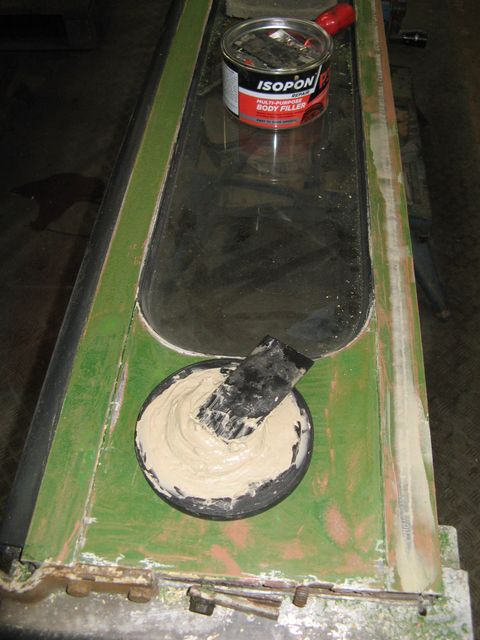
A pair of exit doors is in preparation for painting, using the time-honoured trick of using a wide woodworking chisel to remove the thick, multiple layers of paint in one pass. It still amazes me that it does that, so there was something special about the way that the surface was prepared for its Leaf Green paint in NBC days. I love the element of archaeology that emerges from time to time! Leaf 4 of the exit doors, numbering from the front, has a line of dense, deep gouge-marks running parallel to the actuator pole for about half the height (you can see where the filler has been applied in the picture). It was not until I came to strip the paint that I realised that the cream colour from Blue Lake was filling them, so they must post-date LCBS days, and probably relate to over-enthusiastic use of power tools to smooth or fettle repair work. Then I remembered that the corner returns here were replaced below the waist and filled by about ¼". The marks were cleaned out with a gentle wire-brushing and given a dose of filler before the whole lot was rubbed down ready for painting. Many coats of wax have been applied to my corner plug, but drying is slow and it has been frustrating. Luckily there are a number of grounds-maintenance tasks to work at between coats; clearing the piles of left-overs from construction is a mounting priority now that half of the field has been sold for further development.
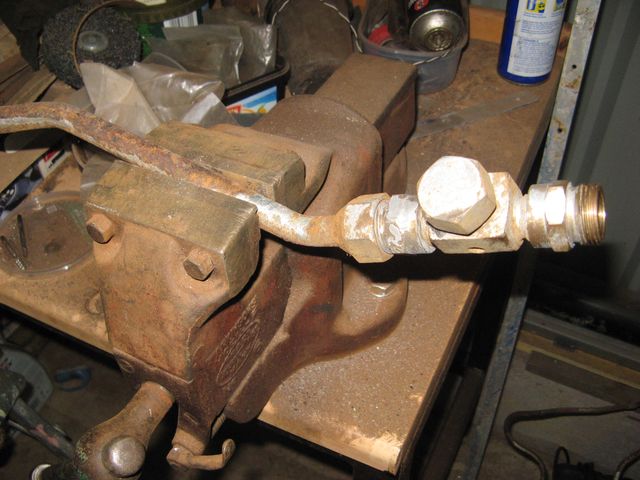
You will probably appreciate that air is a Swift's life-force; it needs air for the self-changing gearbox, as well as its brakes (and doors). Consequently, the condition of its air-tanks and pipes is critical. Many years ago, when resident on Anglesey, the air tanks were removed for cleaning and to start work on renewing the securing straps. They have, of course, been re-installed loosely for a good while, but making good the pipework is another matter. Experiments with replacement nylon pipe have not yet yielded a positive result, because the only replacement olives that I can source are smaller than the originals, and will not grip properly before the fixing nut 'bottoms' on the union. That is bad news, but the search has only just begun. In the meantime, there are pipes which just need fettling before re-assembly, and only one frozen/rusted nut among them, which was given strong heat from my camping-gas stove and a dose of penetrating oil. When cool enough to touch, it was 'addressed' sternly and with great precision. The steel pipe isn't as strong as it seems, so care in work-holding is important, but the critical step was made and movement progressed rapidly from a tiny wiggle through to full disengagement. Both pipes which make up the charging line to the front, low-pressure tank were then cleaned thoroughly with emery cloth tape and given a coat of primer. I felt confident because the temperature had reached the giddy heights of 11°C, despite it being only 3rd February. Focus on air supplies then continued with the replacement of the damaged run of slim nylon pipe between the low pressure tank and the distributor for the doors which is on the front riser. The only units connected to the low pressure supply are the gearbox and door actuators. I am now baffled by how that pipe attaches to the equal-tee on the outlet from the tank because the steel pipework faces in the wrong direction! Another of life's mysteries.
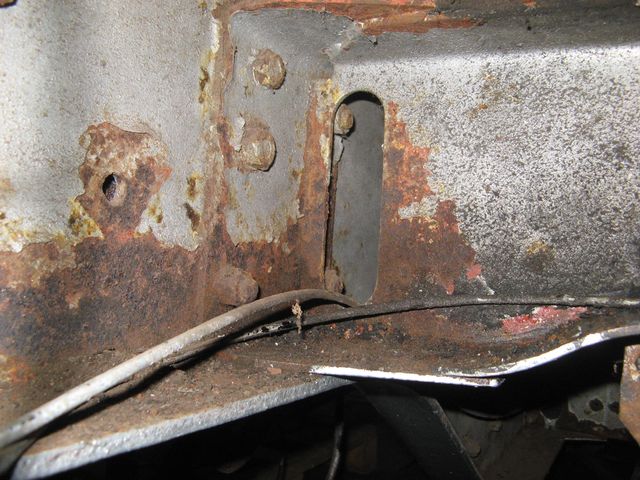
Then it was back underneath to have a look at what else needs to be done before the next major phase of chassis cleaning, painting and re-population can proceed. The main brake pipe from the relay-valve runs along the inside of the nearside chassis rail, which make it a nuisance when attempting to clean-off the rust and muck, but I didn't fancy my chances, as the unions on the relay valve itself are stuck firmly. However, the adaptors for the test-point are made of BRASS, so actually it was a a doddle to undo, and sacrificing the flexible hose to the hacksaw meant it was quickly removed. "So it goes", as Kurt would say. Now there is only the pressure-lubrication pipe and the retro-fitted oil-pressure pipe to contend with, making it much easier. A great deal of rust, soil and grease-berg were soon removed. The chassis cross-member here is in fine condition, though dirty, because of the oil mist from the unloader valve permeating the entire space. This attracts road-dirt, and soon a dust-berg builds up, but it's good protection for the steelwork when the oil supply is adequate. The handbrake cross-shaft also inhabits this zone, so there are a number of fine targets to aim work-parties at here. Huge grease-bergs covered both ends of the handbrake cross-shaft, which I broke away with the usual sharp instrument, but the amazing thing is that the bergs had apparently built-up higher than the grease points. This leaves two questions: how did it build up so high, and how was the greasing effected? The questions are intertwined, of course. A day to savour! As I write this, however, snow has descended on our mountains and the temperature has plunged. That's February for you! There being little else to do on a cold February day, the assault was resumed on the chassis to the rear of the air tanks. Not a pretty sight. Oil mist from the unloader valve has permeated the offside area and a deep wedge of oily soil has built up over the sleeved cable-runs, but as one moves rearwards, the oil diminishes though the soil does not! Whereas the oily mess appears to be a good preservative, the soil isn’t, and the light ochre colour of surface rust tones to a dark black-brown of more penetrating corrosion. The cable-runs will have to be released in this area so that cleaning and treatment can proceed, though a couple of clamps have already rusted away and broken due to their being made of a light-gauge plate. With the removal of the rear brake-pipe, it became obvious that the relay valve itself was easy to detach from the cross-member, being held on a bracket with three (reluctant) bolts. Much of the afternoon was spent with scraper, wire-bush and trusty Black & Decker on the surface rust and flaking paint and the result was a total of four heaped dustpans full of first-grade muck transferred from bus to bin. Despite a sore back, I felt better for that! Cleaning up the relay valve and putting a coat of primer on its mounting bracket was a suitable finale, though whether the valve will function when air is admitted will be the ‘acid’ test. An interesting note at this point is that a faulty relay valve was diagnosed as the cause of the wrecked oil-tank train at Llangennech, Carmarthenshire, where one axle had been running with a locked brake for so long that the wheel-flat ultimately led to its derailment at a turnout. Preparation work will proceed for a while before warmer weather permits rust treatment and primer.
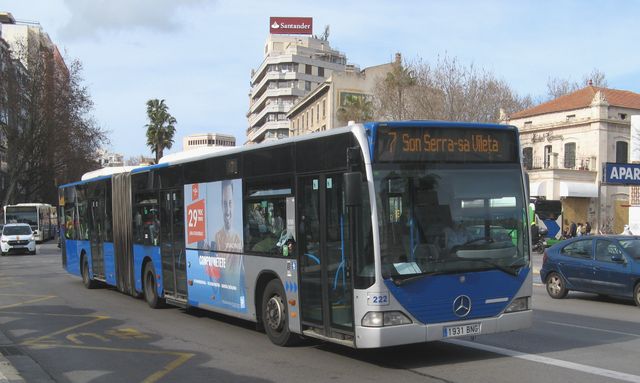
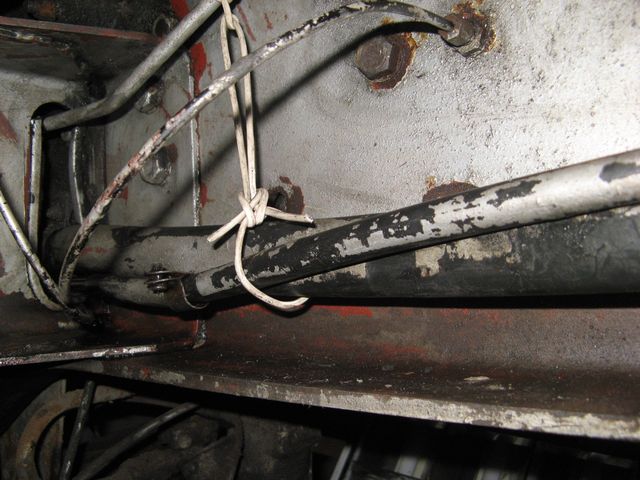
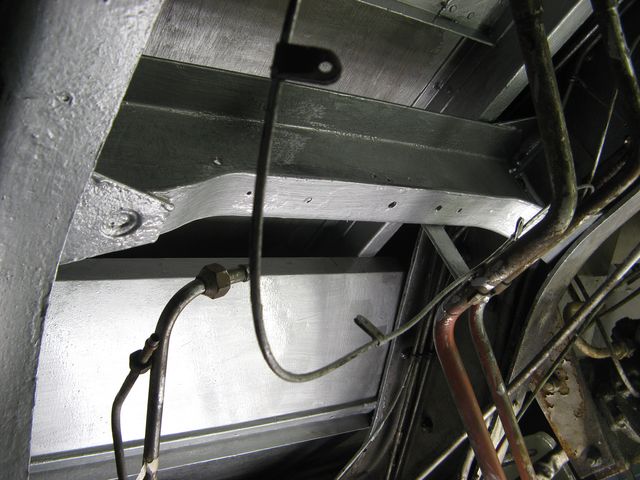
What with Covid and all that jazz, a lot of stuff has gone undone for the last couple of years. Back in the day, before changes at work made me a less strategic person, there would be a working visit to an exhibition/conference in a big city such as London, Amsterdam or Dublin. Another problem which has resulted in less train travel is that our local trains have stopped going anywhere useful, and I cannot even commute to work on our (almost redundant) 175 Coradias. Imagine my surprise at being invited to accompany my son on a cycling break to Mallorca! Apart from a VERY bumpy take-off from Ringway (you don't expect turbulence while on the ground) it all went swimmingly. He cycled, I bussed and trained. What a delight. The sad part, however is that the diesel Citaro fleet is under threat and being replaced steadily by gas powered Iveco and Scania units. At least my garage was deliberately built long enough for a rigid example! After all that excitement, it was back to damp and cold all too soon, and the unpleasant task of cleaning off the chassis ready for warmer, paint-friendly times that lie ahead. Another afternoon of hard graft liberated another dustpan full of muck and rust, and the space as far back as the handbrake cross-shaft looks almost respectable already. The oil-misted cross-member was scraped clean and de-greased with a lick of paraffin before wire-brushing. The chassis lubrication pipe (see picture, above) has been freed from its mountings, so that access is almost unhindered. I also applied my grease gun to the points for steering and handbrake, which made me feel better. I'd love to know when it was last done. Eventually, I was able to saw through the heads of all the little bolts holding the cable-run clips, but sadly only at the expense of a very stiff neck, which developed the following day and without warning! The problem of access for the saw was bad because a couple of the clips were situated behind the rear road-spring, and I had to lie on my back against the offside wheel while trying to work above my head. "So it goes", as Kurt would say. Anyway, the upshot of the afternoon was a de-soiled chassis, cleaned off with degreaser and with the cable sleeving tied-up out of the way and ready for the last stage of abrasion and painting. I keep promising myself that it will be worth it. I also had to take the fan blades off the hydraulic drive so that the supporting structure could be taken for modification to fit the new radiator.
On the way down the valley I called to pick up the fan-drive frame. I am delighted to say that J.P.Engineering did an excellent job; you would hardly know it had been done (and sprayed over with a silver paint to look like the original). A bright day had come, so while the bus was warming up in the shed I did some grounds maintenance, and then set-to at the final stages of wire-brushing and cleaning before starting a liberal coat of FLAG rust converter paint. It looks better already now that there is no rust or soil to be seen! Finally, saving the best bit until last, the modified fan-drive frame was offered up to the back of the radiator. The fit was perfect. Not a difficult brief, to extend the frame by the magic four inches, but perfectly executed. A happy day!
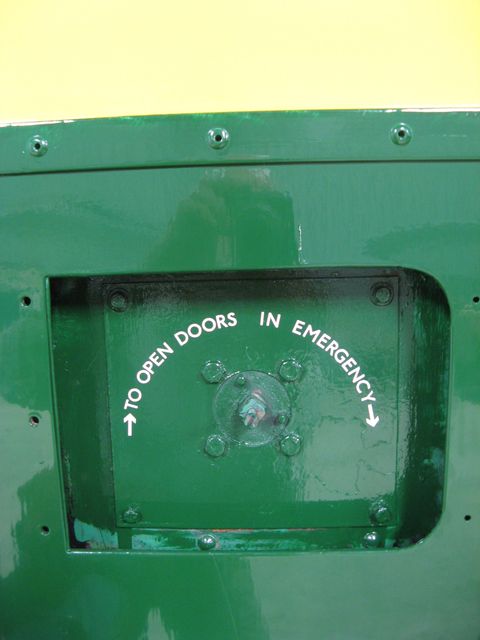
With weather warming-up nicely, all sorts of things have suddenly become possible. First came the PVA and gel-coat on the plug for the front corner panel, which had received a coat of wax every time I couldn't think of anything else to do. Nail-biting stuff, but it went tacky as it should, so I put some lightweight glass cloth on it and wetted it down with tooling resin. Once again it did what I had hoped, so I left it to its devices and went home. Later in the week, another opportunity presented itself to go back with red oxide primer for the chassis and two layers of standard-weight glass cloth on the moulding project, which seems to be taking shape well. The acid test will come when trying to separate it from the plug! To finish the day I applied new vinyl lettering (ex Squirrel Preservation) to the plate under the front door emergency flap, which looked surprisingly authentic. A 6km Easter walk with my son and the whole tribe of dogs took us in fine weather to an essentially random location on the edge of the Denbighshire uplands, where we saw nobody and met no road traffic at all.
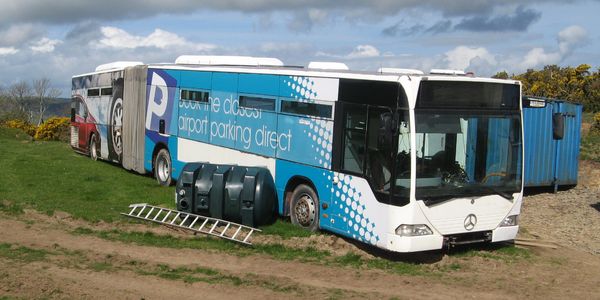
It just goes to show that if you try hard you can escape the Bank Holiday madness in North Wales. So, can you imagine my amazement when we found a single-deck bus on an area of hard standing by a farm, at an altitude of 300m and at least 1km from a tarmac road! As we drew closer it transpired that it was not only a bus, but a bendy-bus, and very obviously a Citaro-G. A bit of internet searching showed it to be ex-East London 20638, later with OFJ Connections at Gatwick Airport. What an extraordinary and intriguing find! I can only guess what Kurt would have said; maybe "everything is nothing, with a twist".
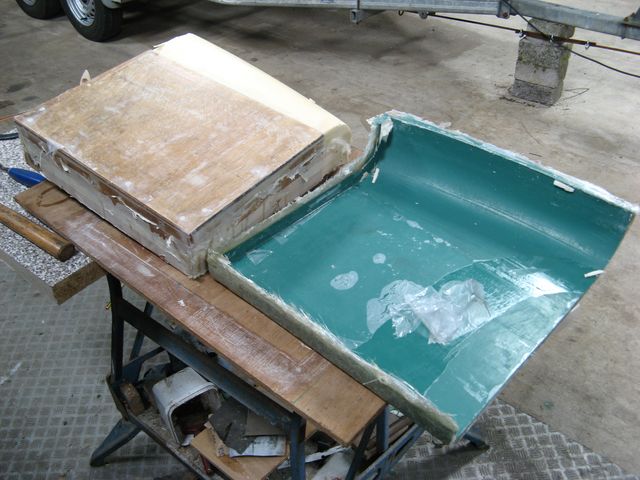
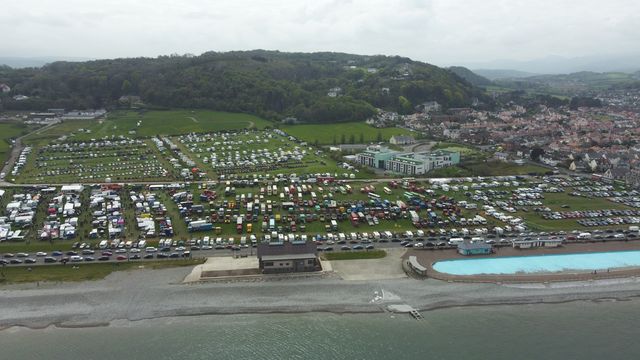
The great temporal landmarks in North Wales are Easter, Christmas and the Llandudno Transport Festival. A key piece of equipment has lived at LL for the past couple of years - the bins trailer. I had a run down the valley to open the door for its removal, and while I was there put two more layers of heavy glass cloth onto the mould which is now coming along nicely. The rule of my neighbour's thumb is "twice as thick as the part you are moulding", and he should know because he has written a book on the subject. A couple of days later I was having a normal session, when I put a second coat of silver on the chassis and separated the mould from its plug. Both tasks went well, so I am very pleased with progress and can look forward to preparing to make the new nearside corner piece once the mould has had time to cure properly. I was surprised by the way that the mould-release PVA separated like a sheet of thin tissue paper, but I suppose that just shows it was doing its job. During the same weekend I was one of many who were already beavering away preparing the Festival fields - it is only when they are empty and viewed from their highest point (or a helicopter, see below) that you can grasp what a big area it covers! Pleased to find No.10 UNF screws and nuts at affordable prices, the lubricator pipe to the nearside rear spring was re-installed, as was the terminal block for the cables in the battery compartment. Further progress on re-installation of the air system was also possible, so the brake relay valve has been put back on its bracket, and the new unloader valve bolted in place. Now I can make sense of more of the pipe runs! In between whiles, three coats of wax were put on the mould for the front dash corner - and that's about it for a while. The Llandudno Transport Festival proved to be a great success, partly due to the fact that everybody was quite simply pleased to meet up and get on with the job. For a large number of exhibitors this was their first event for at least a couple of years, so there was a lot to catch up on, or to compare the performance of the Cummins and AEC lump as applied to London buses of a certain vintage. We were also graced by the presence of M5, so we had a larger and more varied LT run-out than usual among the many fabulous buses and coaches on display. I enjoyed very much a short turn at the wheel of a 1983 Olympian, having not driven a large vehicle for a few years now! I have also initiated the change of SM106's tax status to 'historic' - a small point that will I hope prove to be of convenience, if not value in future.
|

|
BACK .......to the index. |
FORWARD .......to continue the diary. |